
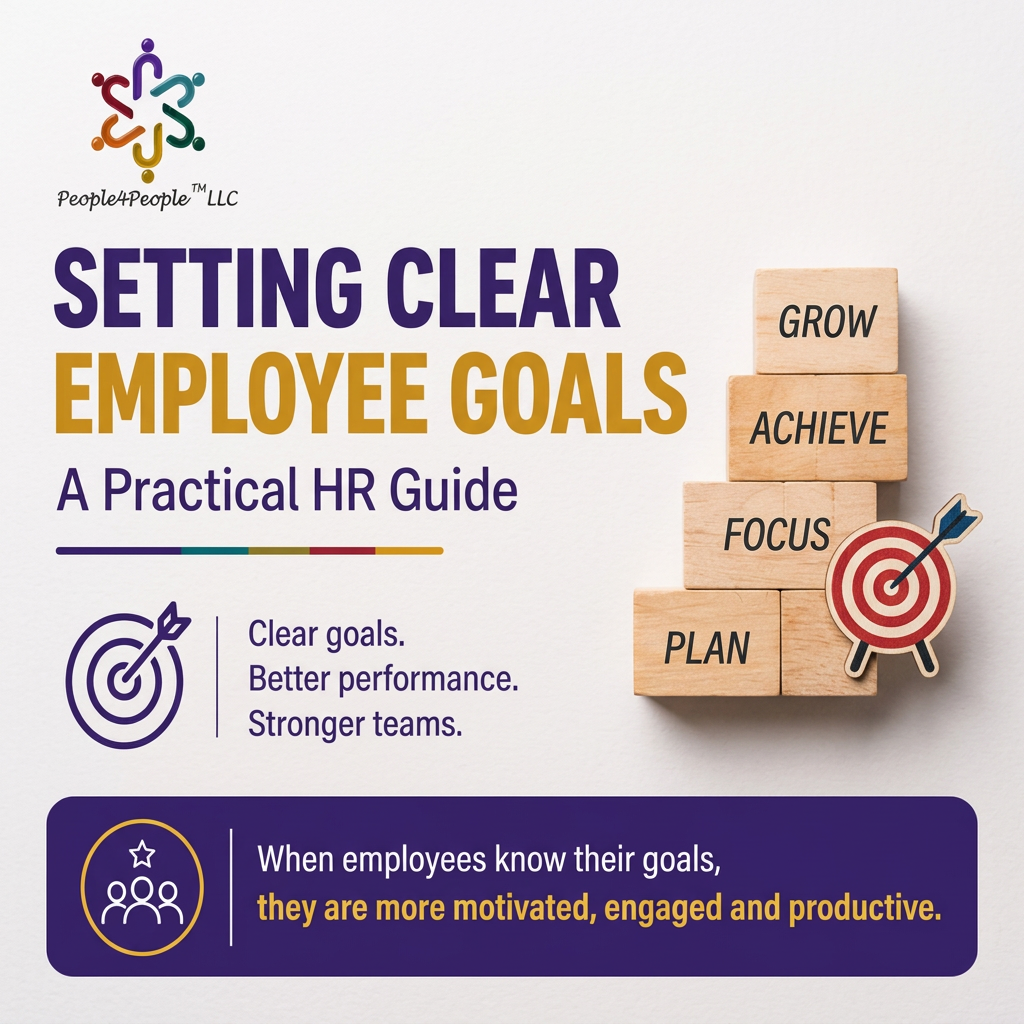
Setting Clear Employee Goals: A Practical HR Guide
Employees are more likely to perform well when they understand exactly where they are headed. Clear goals create purpose, help managers communicate expectations, make progress easier to measure, and provide a meaningful basis for recognizing achievements.
Effective employee goals should include:
· Clarity: Employees understand what is expected, what success looks like, and when the goal should be achieved.
· Purpose: Employees see how their work connects to team priorities, customers, and broader business goals.
· Ownership: Employees have responsibility for the outcome—not simply a list of tasks to complete.
· Flexibility: Goals can be reviewed and adjusted as business priorities, customer needs, or circumstances change.
· Accountability: Regular manager check-ins create opportunities to discuss progress, remove obstacles, and keep commitments on track.
Goal setting should not happen only during an annual performance review. Short, consistent conversations between managers and employees can identify challenges early, celebrate progress, clarify shifting priorities, and keep everyone aligned.
When employees understand their goals and see how their work contributes to the bigger picture, they are more likely to stay motivated, engaged, and productive.
The result: clearer expectations, stronger performance, and a more accountable workplace.
Question: How often do your managers and employees have meaningful conversations about goals and progress?