
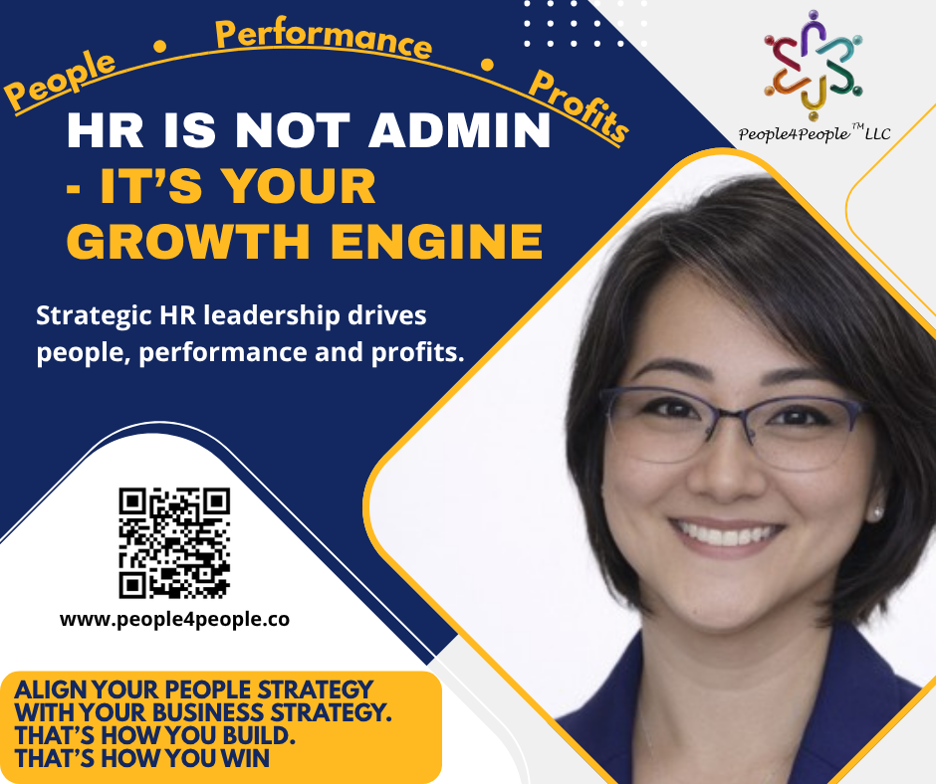
HR Is Not Admin—It’s Your Growth Engine
For many CEOs and founders, HR is still seen as an administrative function—handling payroll, compliance, and hiring paperwork. But in today’s competitive market, that mindset is not just outdated—it’s costly. HR strategy is business strategy, and companies that fail to recognize this often struggle with growth, retention, and performance.
Organizations that treat HR as a strategic growth engine consistently outperform those that see it as a cost center. A well-defined human resource strategy directly impacts productivity, employee engagement, and long-term scalability.
The Hidden Cost of Treating HR as Admin
When HR operates reactively instead of strategically, the consequences ripple across the organization:
● High employee turnover: Replacing talent can cost 50%–200% of annual salary
● Leadership gaps: Lack of succession planning slows business growth
● Low engagement: Disengaged employees reduce productivity and innovation
● Poor hiring decisions: Misaligned hiring leads to costly turnover and cultural disruption
These aren’t just HR issues—they are core business performance challenges.
Strategic HR: The Foundation of Business Growth
High-growth companies embed HR strategy into their business model. Here’s how strategic HR drives measurable outcomes:
1. Talent Strategy That Fuels Revenue
Hiring is not about filling roles—it’s about building capabilities that align with business goals. A strong talent acquisition strategy ensures you hire the right people at the right time, accelerating growth.
2. Leadership Development for Scalable Success
Your organization cannot outperform its leadership. Investing in leadership development programs improves execution, accountability, and team performance.
3. Employee Experience That Drives Retention
Retention is built through clarity, purpose, and growth opportunities. Strong employee engagement strategies reduce turnover and improve organizational stability.
4. Data-Driven HR Decisions
Modern HR uses analytics to track performance, predict attrition, and optimize workforce planning. This transforms HR into a predictive business function, not just operational support.
Why a Fractional CHRO Is a Smart Move
Many growing companies are not ready for a full-time Chief Human Resources Officer—but they still need strategic leadership. A Fractional CHRO provides:
● Executive-level HR consulting and strategy
● Alignment between people strategy and business goals
● Scalable systems for hiring, performance, and retention
This approach delivers high-impact results without the cost of a full-time executive.
The Bottom Line
If you’re still treating HR as an administrative function, you’re limiting your growth potential. Companies that win today understand one key principle:
Your people strategy is your growth strategy.
When HR is positioned as a strategic driver, businesses achieve stronger performance, higher retention, and sustainable scalability.
Final Thought
The real question isn’t whether you need HR—it’s whether your HR is actively driving growth or holding your business back.
If you’re ready to transform HR into a competitive advantage, it’s time to rethink your approach to strategic HR leadership.