
The Hidden Cost of Bad Hiring Decisions (And How to Avoid It)
In today’s competitive business landscape, CEOs and founders know that talent acquisition is critical to success. Yet, many organizations still underestimate the true cost of a bad hire. It goes far beyond salary or recruitment fees—impacting productivity, employee retention, company culture, and overall business growth.
A poor hiring decision doesn’t fail in isolation. It creates ripple effects across teams, slows execution, and weakens organizational performance. According to research, the cost of a bad hire can reach up to 30% of first-year earnings—but for leadership roles, the real cost is often much higher when you factor in lost time, missed opportunities, and cultural damage.
Why Companies Make Costly Hiring Mistakes
Even high-performing businesses fall into common hiring traps—not due to lack of effort, but lack of hiring strategy and alignment.
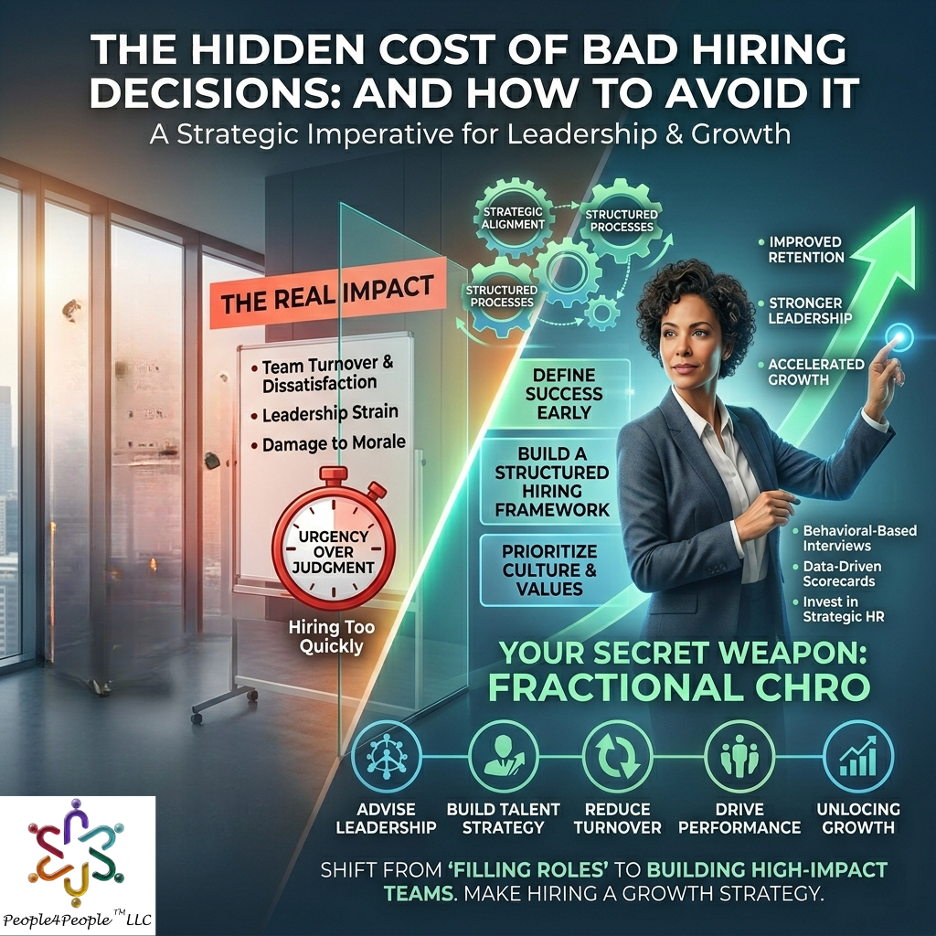
Hiring too quickly: Urgency to fill roles often leads to poor decisions. Speed without strategy creates long-term setbacks.
Lack of role clarity: Without clearly defined expectations, hiring becomes subjective and inconsistent.
Overemphasis on skills: Technical expertise matters, but culture fit and leadership alignment are key drivers of long-term success.
Unstructured hiring processes: Without standardized frameworks, decisions become biased and ineffective.
The Impact on Employee Retention and Growth
Bad hires directly affect employee engagement and retention. When teams compensate for underperformance or face cultural misalignment, morale drops. High-performing employees are often the first to leave, creating a costly cycle of turnover.
Organizations with strong hiring and onboarding strategies see significantly higher retention rates. This highlights a critical truth—hiring is not just an HR function; it’s a core business strategy.
How to Avoid Bad Hiring Decisions
Preventing costly hiring mistakes requires a strategic and structured approach:
● Define success early: Set clear expectations for the role with measurable outcomes.
● Standardize your hiring process: Use structured interviews, scorecards, and multiple evaluators.
● Prioritize culture fit: Align candidates with your company values and leadership style.
● Invest in HR leadership: A Fractional CHRO ensures hiring aligns with long-term business goals.
● Strengthen onboarding: A solid onboarding process drives early performance and retention.
Hiring Is a Business Growth Strategy
Too many organizations treat hiring as a transactional activity. In reality, it is one of the most powerful drivers of scalable growth, productivity, and profitability.
Every hire either strengthens your organization—or sets it back.
Final Thoughts
Bad hiring decisions are expensive—but avoidable. With the right HR strategy, talent management practices, and leadership alignment, businesses can turn hiring into a competitive advantage.
Because the real cost of a bad hire isn’t just what you lose—it’s the growth your business never achieves.