
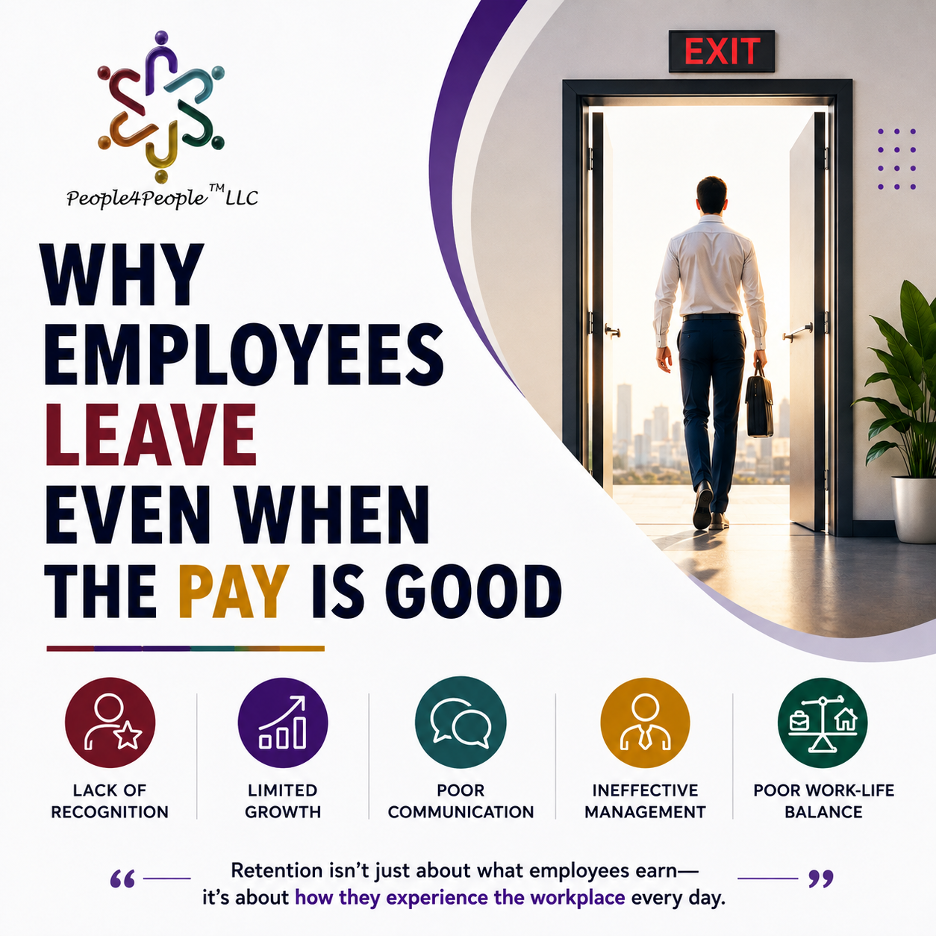
Competitive pay helps attract and retain talent, but it is only one part of the employee experience. Employees may still leave when they feel overlooked, unsupported, overworked, or uncertain about their future with the organization.
Common reasons employees look elsewhere include:
Limited opportunities for career growth and skill development
Poor communication or ineffective management
Lack of recognition for their contributions
Excessive workloads, unrealistic expectations, or weak work-life balance
A disconnect between their work and the company’s goals
Employees are more likely to stay when they feel respected, heard, and supported. Regular one-on-one conversations give managers an opportunity to identify concerns early, provide meaningful feedback, and understand what employees need to succeed.
Recognition also has an important role. Consistently acknowledging effort and results can strengthen morale, engagement, and trust—particularly when it is specific and timely.
Retention is not simply about what employees earn. It is about creating an environment where people can grow, contribute, and see a future for themselves.
Final Thoughts
Good pay may get talented people in the door, but it does not guarantee loyalty. If employees are leaving despite competitive compensation, look beyond salary. Strengthening communication, development, recognition, management, and work-life balance can give employees compelling reasons to stay.
Because retention isn't just about what employees earn—it's about how they experience the workplace every day.